Do Movie Sequels Always Get Worse?
A data-driven visualization testing if movie sequels are really worse than the first
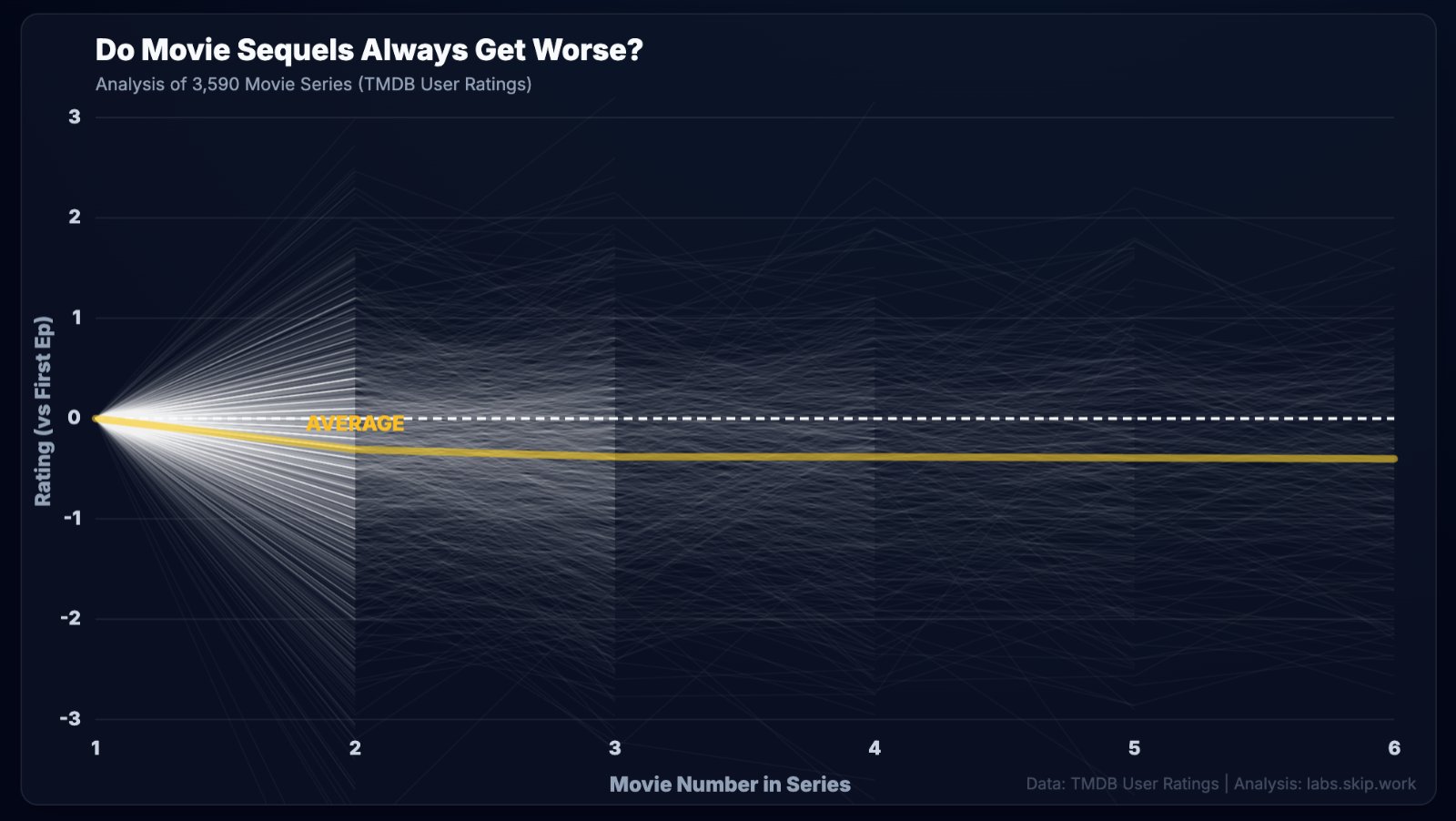
"Movie sequels are almost always worse."
Is this classic pop-culture belief actually true? This data visualization tests the trope against real-world film rating datasets using statistical analysis.
Sequels Really Do Rate Lower Than Originals
Looking at the raw numbers, sequels (average rating: 5.98) score significantly lower than their first installments (average rating: 6.29). In fact, 43% of all movie franchises show a clear downward trajectory across their releases.
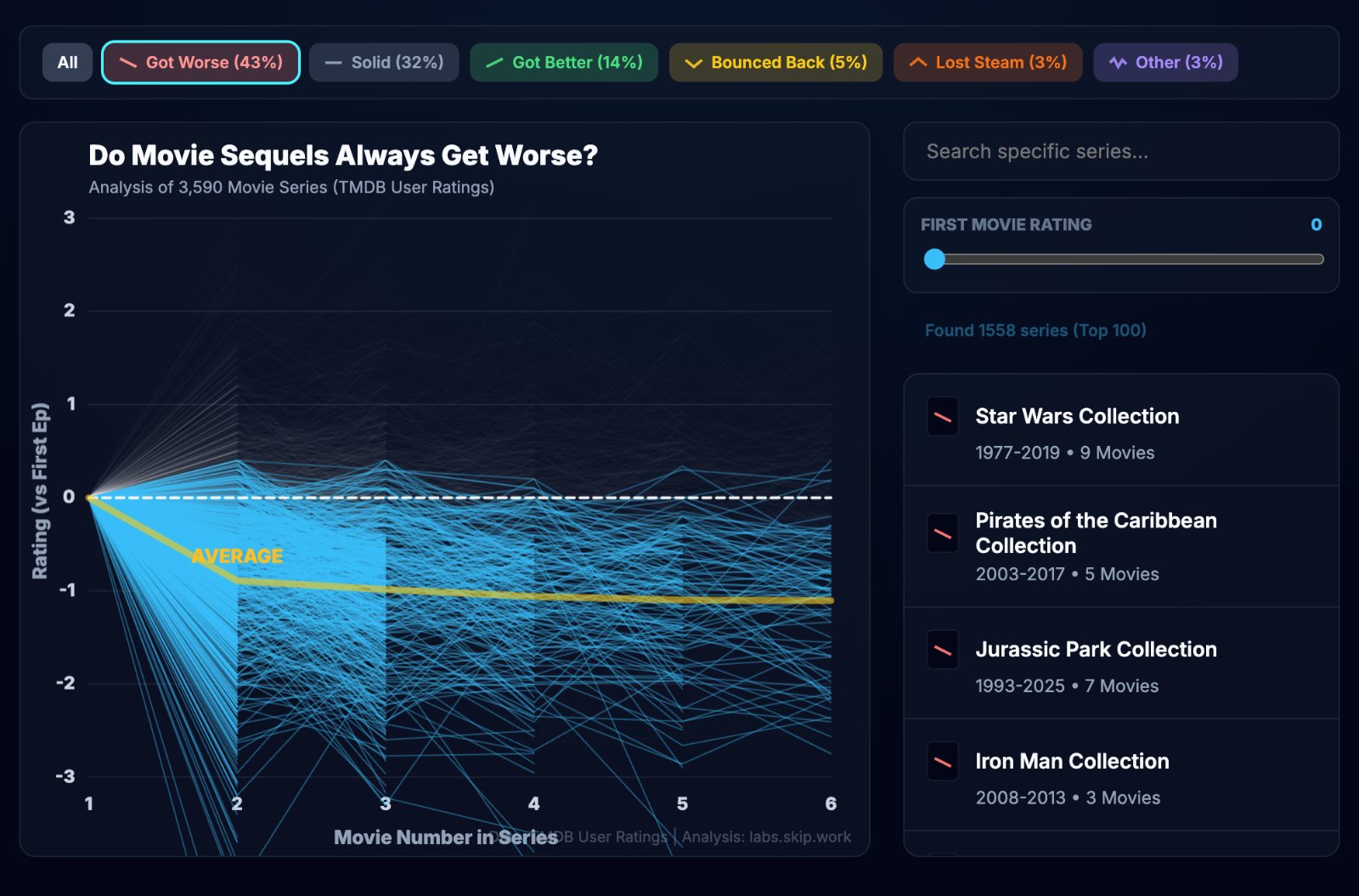
Why Sequels Disappoint: Regression to the Mean
People usually chalk this decline up to creative missteps—studios cashing in, directors succumbing to pressure, or writers running out of ideas. But analyzing thousands of franchises reveals a far simpler mathematical reality: Regression to the Mean.
Studios only greenlight sequels for films that were exceptional runaway hits to begin with. The data shows that originals that earned a sequel (average: 6.29) scored significantly higher than the baseline for all films combined, including standalones (average: 5.94). In short:
- The anomaly was the original (it was unusually good).
- The sequel simply "drifted back to being an ordinary film."
Even if a sequel turns out to be perfectly decent, comparing it against an extraordinary outlier makes it look like a letdown by default.
Franchises That Beat the Curse
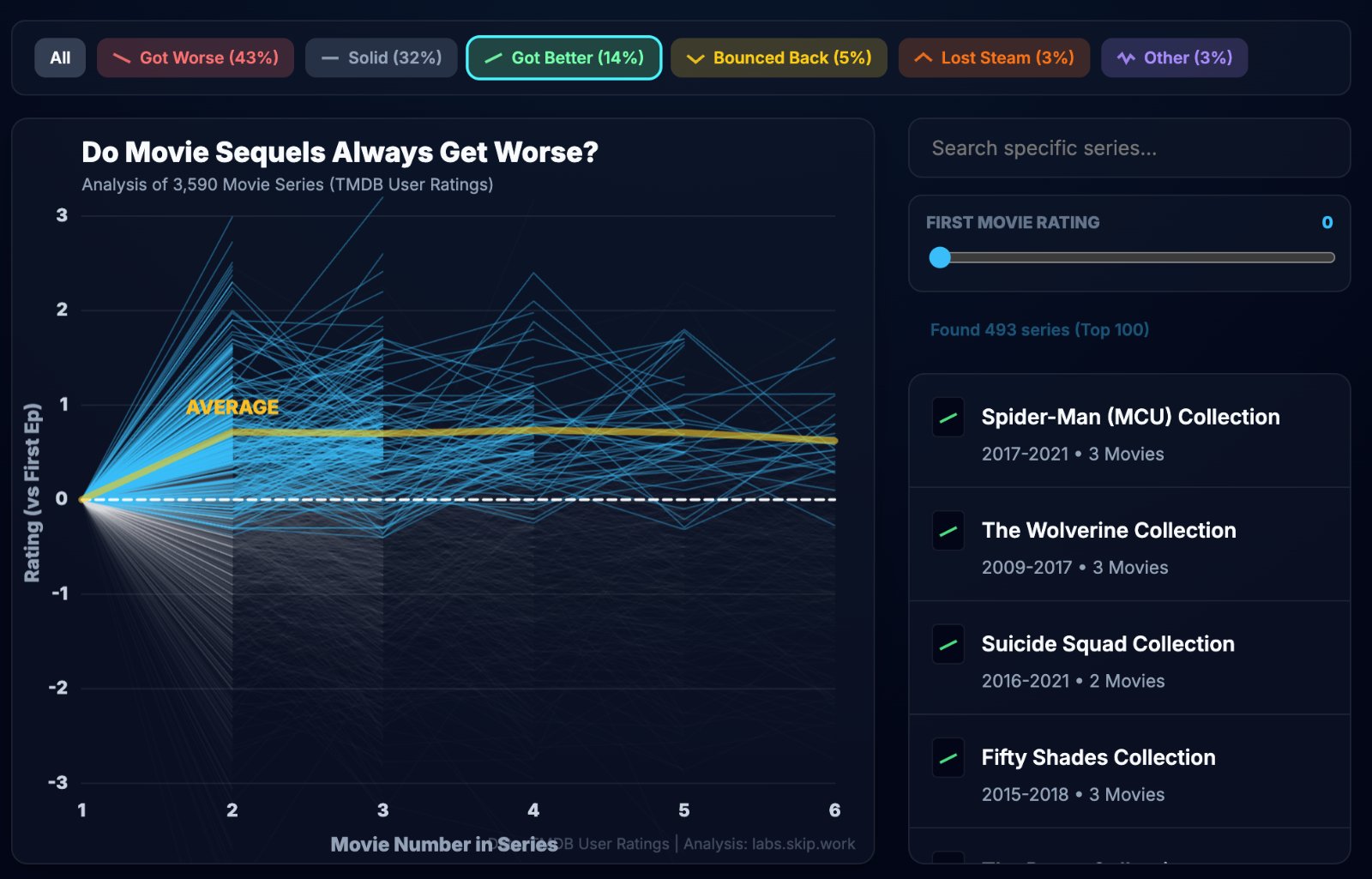
A handful (about 14%) of notable exceptions defy this statistical gravity, improving their ratings with each subsequent release: franchises like Spider-Man, Minions, and the Hollywood Godzilla series.
Debunking cultural common knowledge with real data often reveals a far more fascinating story underneath.